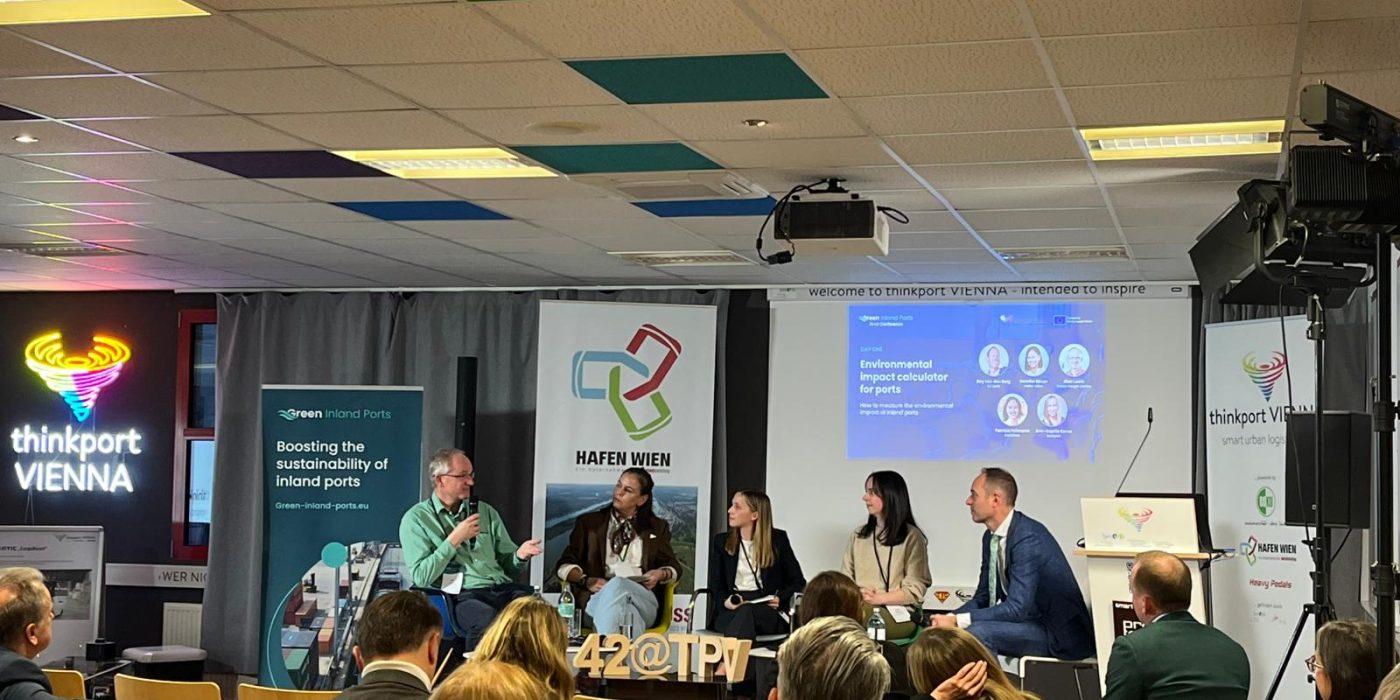
The Green Inland Ports final conference brought together representatives from European ports, national authorities, international organisations and other experts for two days of exchanges in Vienna and online. The event provided an overview of the project’s final results and offered stakeholders the opportunity to reflect on current challenges, opportunities and future developments. Pilot ports also shared their experiences from testing the GRIP tools during the project.
Green-Inland-Ports-Final-Conference_Presentation
Day 1 – Policy and tools for greener inland ports
The first day opened with keynote speeches from the European Commission, the Austrian Federal Ministry for Transport, Innovation and Technology and the European Barge Union, who highlighted the role of Inland Waterway Transport and inland ports in contributing to Europe’s climate, mobility and competitiveness objectives. Speakers underlined the importance of cooperation among inland ports to accelerate the transition toward greener operations.
The project team presented the full suite of tools developed under the Green Inland Ports initiative to support ports in strengthening their environmental performance and digital readiness. Alan Lewis from Smart Freight Centre introduced the Port and Terminal GHG Calculation Guidance and explained the role of different reporting standards and why ports increasingly need to calculate and disclose emissions. Roy van den Berg of CE Delft presented the Port Environmental Impact Calculator and demonstrated how inland ports can quantify environmental impacts based on port activity data and energy use. Pilot ports shared how the calculator has helped them and its future use in their ports.
This was followed by an overview of the Environmental & Sustainable Management Systems approach. Ioanna Kourounioti from Panteia explained how ports can use the GRIP-ESMS framework to assess their environmental performance, identify improvement areas and plan concrete actions through structured diagnosis, planning and implementation steps. Several pilot ports shared insights from their own testing of the tools and reflected on lessons learned during the project.
The first day concluded with a presentation by Dr. Sotirios Theofanis on environmental challenges faced by European seaports, and an intervention by the Transport Community on financing the green transition of inland waterway infrastructure.
Day 2 – Urban and short-range IWT, digitalisation in ports and regional cooperation
The second day of the GRIP final conference centred on urban and short-range IWT and the digitalisation of inland ports. Keynotes from the European Federation of Inland Ports, the Danube Commission and the Vienna Business Agency mentioned the importance of innovation, multimodality and climate-neutral port development in the current transport landscape.
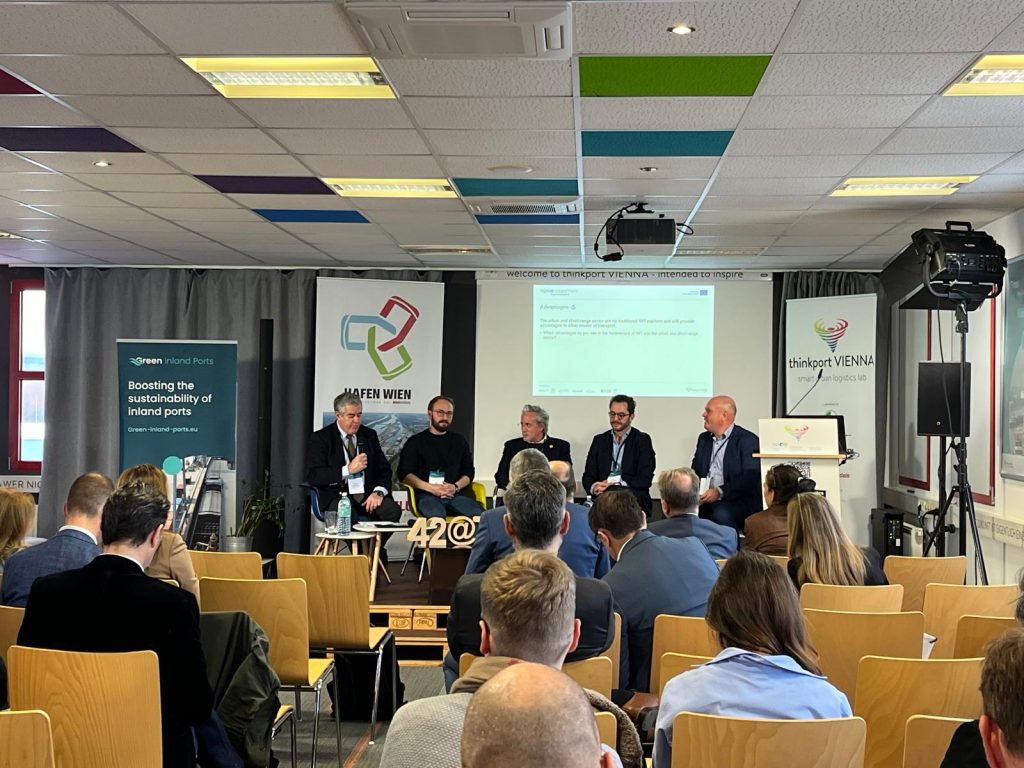
Josep Casanovas from DG MOVE presented the EU Urban Mobility Framework, outlining how inland waterways can support sustainable passenger and freight mobility in urban areas. This was followed by a presentation of Henrik Armbrecht of PLANCO Consulting, who introduced good practice examples and the roll-out potential of urban and short-range IWT from the GRIP study. Their interventions were followed by a panel discussion including representatives from thinkport VIENNA, BEHALA and Paris Terminal SA, who shared operational perspectives on how cities can integrate inland waterways more effectively into urban logistics supply chains.
Digitalisation was another central theme of the day. Saša Jovanović from Pro Danube / iC consulenten together with Robert Rafael presented the Digitalisation Masterplan for inland ports, outlining a long-term vision and a practical roadmap to support ports in becoming digitally integrated logistics hubs. He also discussed lessons learned from pilot ports using the Digital Maturity Assessment Tool and the growing need for interoperable systems and data-driven decision-making.
The event’s final presentation was delivered by Elson Thana from the Transport Community, who provided an overview of progress on the TEN-T extension in the Western Balkans. He highlighted ongoing investments in infrastructure and digital navigation systems and explained how the region is moving toward greener, smarter and better-connected waterborne transport.
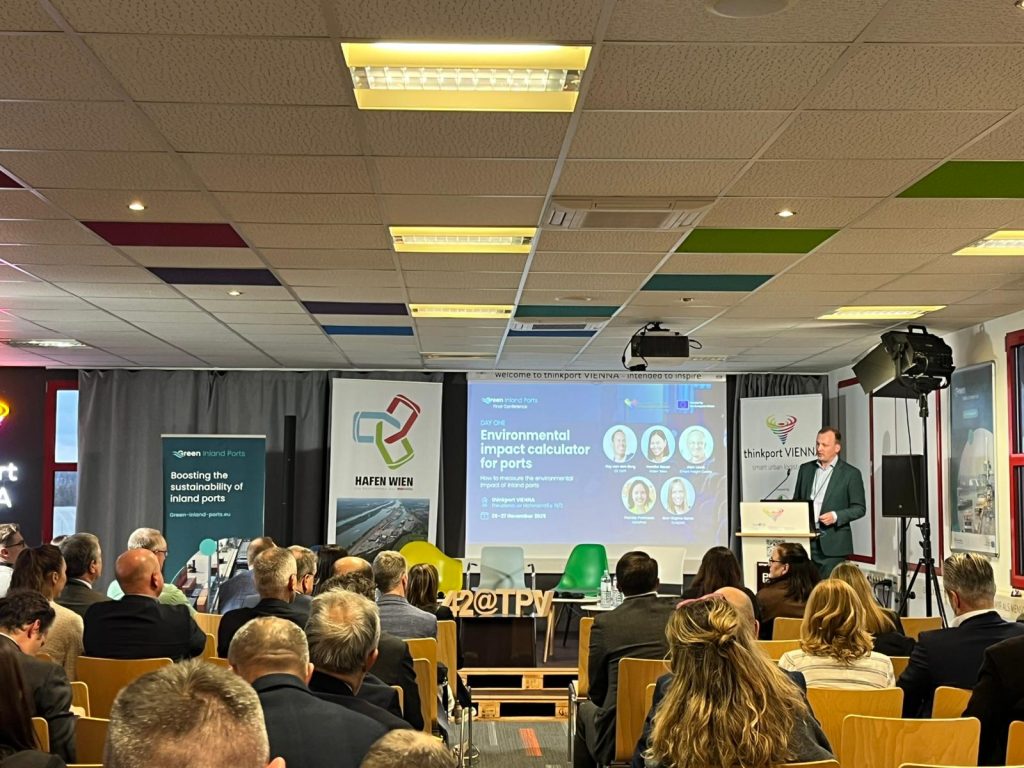
What is next for the Green Inland Ports project?
The final conference concluded with an invitation to stakeholders to provide feedback on the project’s recommendations. A key suggestion was the preparation of a joint action plan by the European Commission, the inland ports sector and relevant international organisations. The aim is to ensure a continued development of the project results.
On behalf of the GRIP study team, we would like to thank the participants, pilot ports, panellists, speakers, event organisers, task leaders, European Commission/DG MOVE and everyone else who has supported and contributed to the project over the years. We would also like to thank Thinkport Vienna for co-organising and hosting the GRIP final conference!